



Summer’s already over? When did that happen?!
We’re writing to you today just as we’re putting the farm to sleep for the season, with the tractors running in the background. So much has happened in the last three months, but to really sum it up: this season has been awesome. We haven’t done final calculations just yet, but we’re on track to significantly surpass last year’s total poundage of veggies.
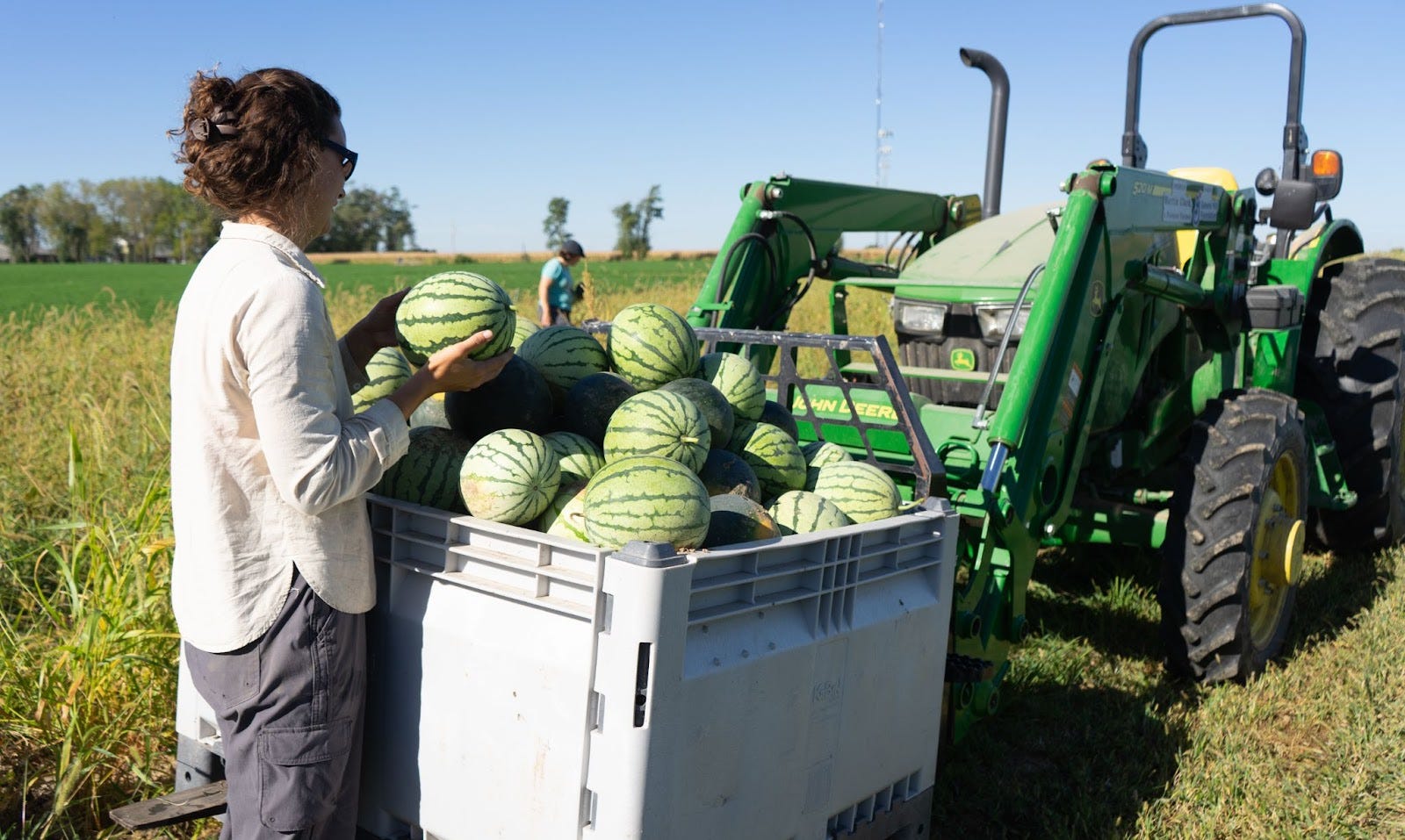
What were the best harvest highlights, you ask? That’s easy (there were just so many)! The melon field this summer was a huge success. Every time we thought we were finished with it, there were suddenly more to harvest. Every variety gave us a bumper crop -- watermelon, cantaloupe, and a handful of interesting heirlooms -- and boy, did they taste good. One of the four-year-old recipients was excited because, “you can only get the good yellow watermelon at daycare.”
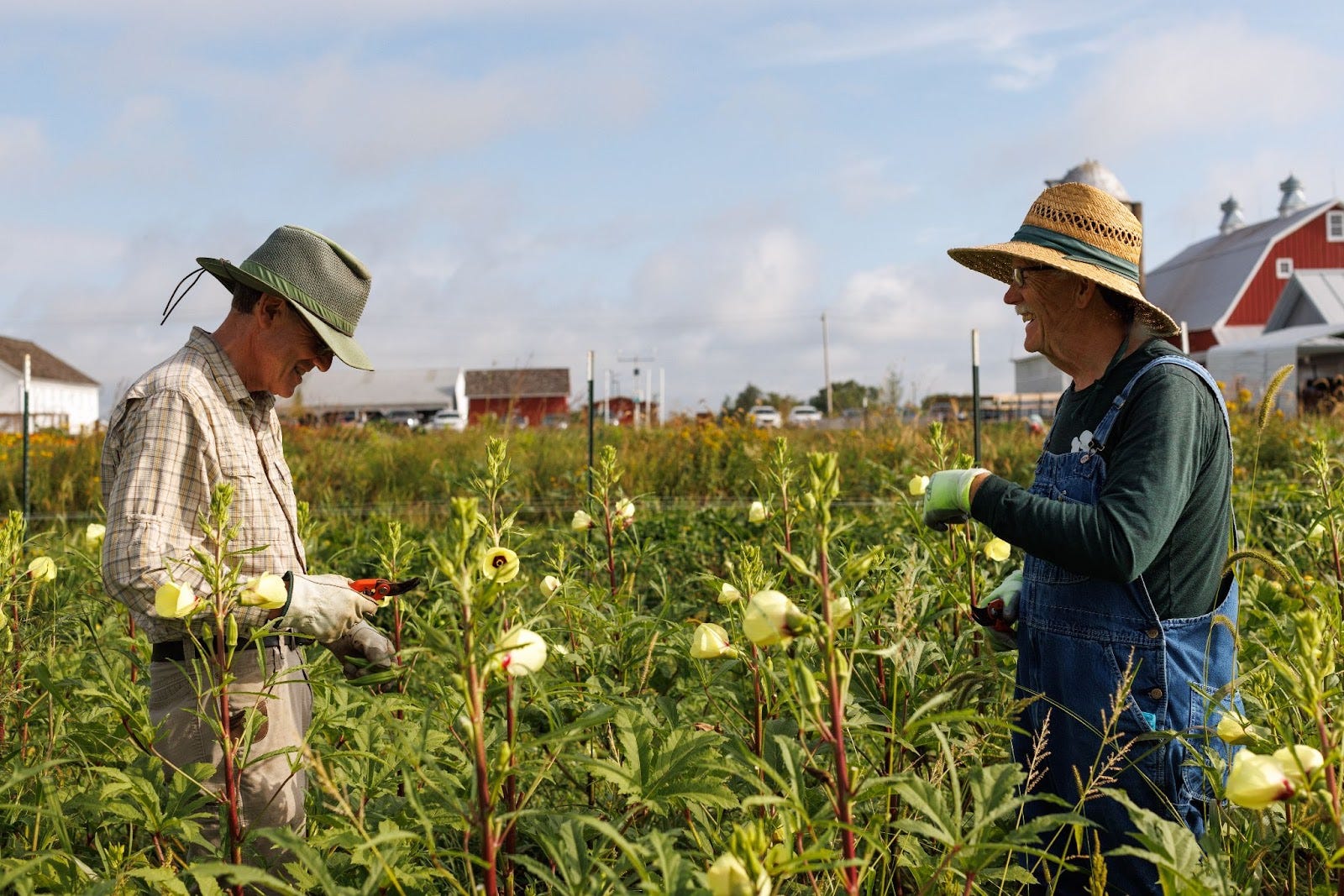
We have to give a shout out to our okra crop this year, too. Three days a week for more than two months, without fail, our dedicated volunteers ran through our (very large) field of okra, harvesting hundreds of pounds each time. Okra is quite popular with our partners, and though it was itchy, we never missed a day! That said, we didn’t cry when it was finally time to mow it down.
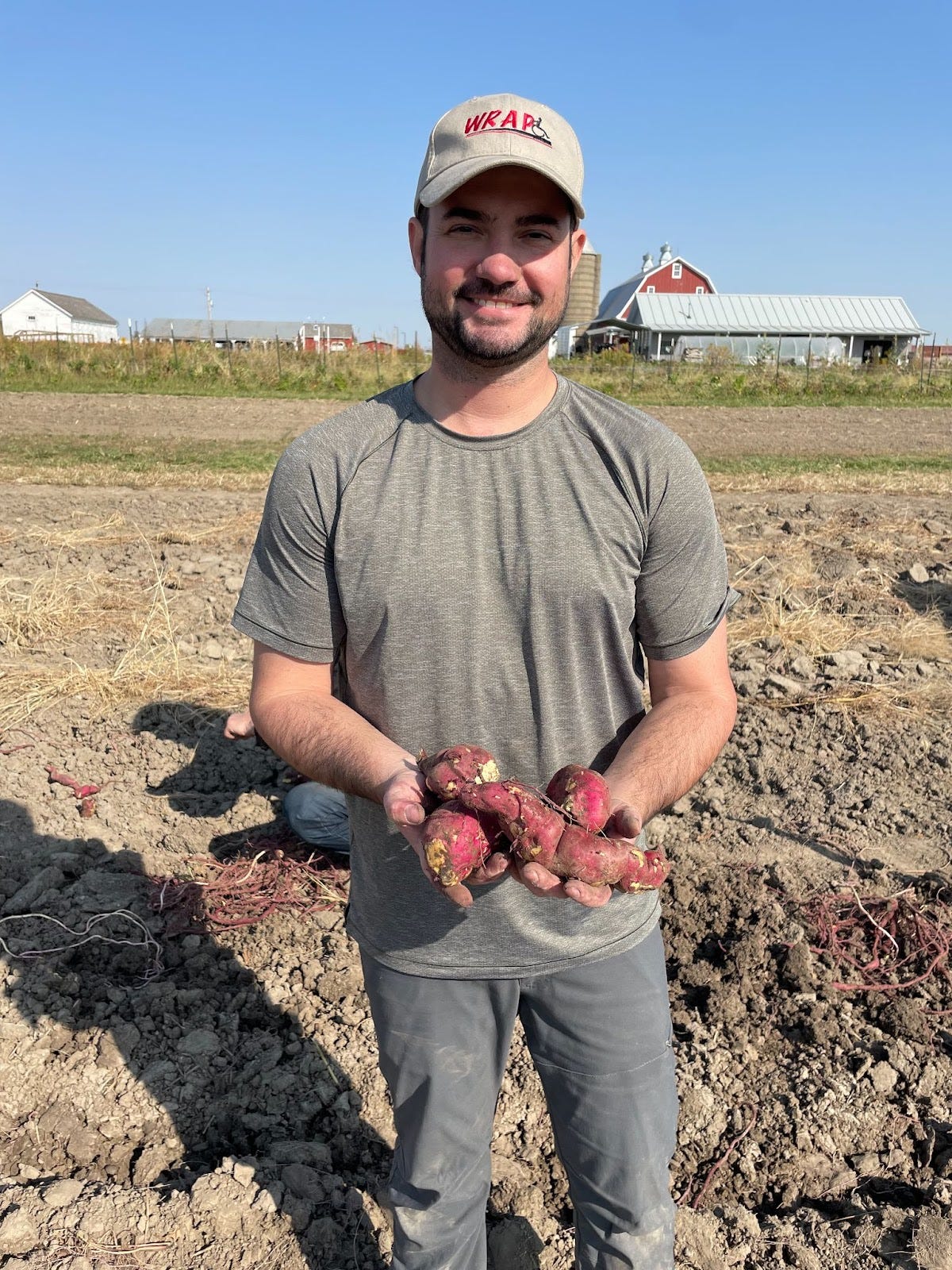
The sweet potatoes were quite lovely, as well. While a little smaller on average than last year’s, we had far less rodent damage and higher quality yields. Harvesting those babies is a big job. First, we have to remove the vines by hand so we don’t damage the potatoes sticking out of the ground. Then, we pull out all the landscaping fabric we use to keep weeds down between the rows. Finally, we use the tractor to take an undercutting tool down each row to loosen the clumps of sweet potatoes before picking them up by hand. Thankfully, we had enthusiastic help from our volunteers with IDT (Integrated DNA Technologies), and everyone had a blast with harvesting.
Equally enthusiastic volunteers from CIVCO Medical Solutions helped us finish up our garlic processing and field clean-up earlier in October. We’ll be replanting some of that garlic this week into one of our no-till fields for next season. We’ve made record time with the field clean ups this year, all thanks to the many remarkable volunteers we’ve had. Grow: Johnson County wouldn’t be what it is without all of you, and we thank you all for your dedication and hard work!
Since we’re wrapping up the season, our final official volunteer day will be Wednesday, October 30th from 9-12. We’ll be all done distributing veggies on November 8th.
No-Till? No Problem!
Grow hosted its second annual No-Till Field Day on September 10th. As you probably know, Grow has several fields in a three-year no-till trial. We host field days to open up our trial fields to the public and share our experiences. There have been some successes (and some definite failures), but we hope that by making the mistakes here at Grow, it’ll be easier for future farmers to implement no-till practices into their own systems. Iowa State University (ISU) and the Rodale Institute attended to talk about findings with some of their own vegetable and grain no-till trials.
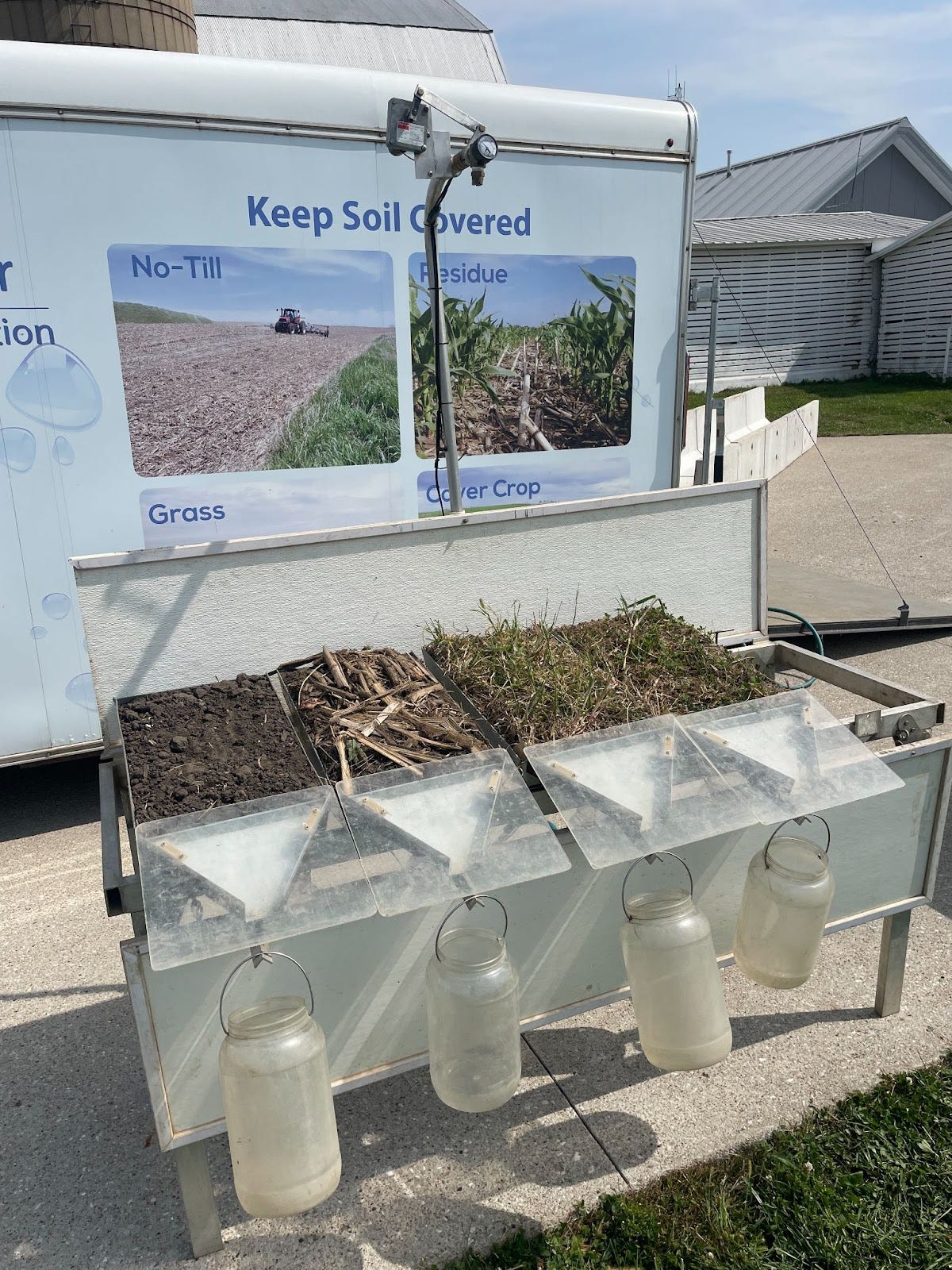
The NRCS brought a rainfall simulation to show how different farming practices impact soil quality. They tested four samples total in their demonstration: two no-till locations from the Grow farm, and two mostly bare conventional samples. We were able to see just how much extra water is fully absorbed into no-till soil, and how much cleaner infiltrated water is.
No-till practices reduce erosion, soil loss, and keep more moisture in the soil, among other benefits. That said, they also present challenges. In our case, all of our no-till fields have nitrogen and other nutrient deficits. Despite adding organic fertilizers, our fall brassicas, although bigger than last year, were still only about a quarter of the size they should have been. We have one year left for our three year experiment, and we are excited to continue learning what to do and what not to do when it comes to no-till farming.
Can You Dig It? 6th Grade Field Trips
Kids are like plants: give them sunshine, open air, water, and they will grow. Sprinkle in some pepper picking and potato washing and they just might grow into the next generation of farmers.
This fall, we’ve welcomed over four hundred sixth grade students from across the Iowa City Community School District (ICCSD) to the Johnson County Historic Poor Farm (JCHPF) for Grow’s biggest education initiative yet.
With the help of many wonderful partners including Global Food Project, the Iowa Flood Center, Iowa City Natural Resource Conservation Service, Garden Bridge, Grow: Johnson County volunteers, and ICCSD staff the students moved through six different stations in various locations on the farm. The students learned about vegetable production, community gardening, and conservation projects taking place at the farm. Here is a quick snapshot of some of the engagement with students.
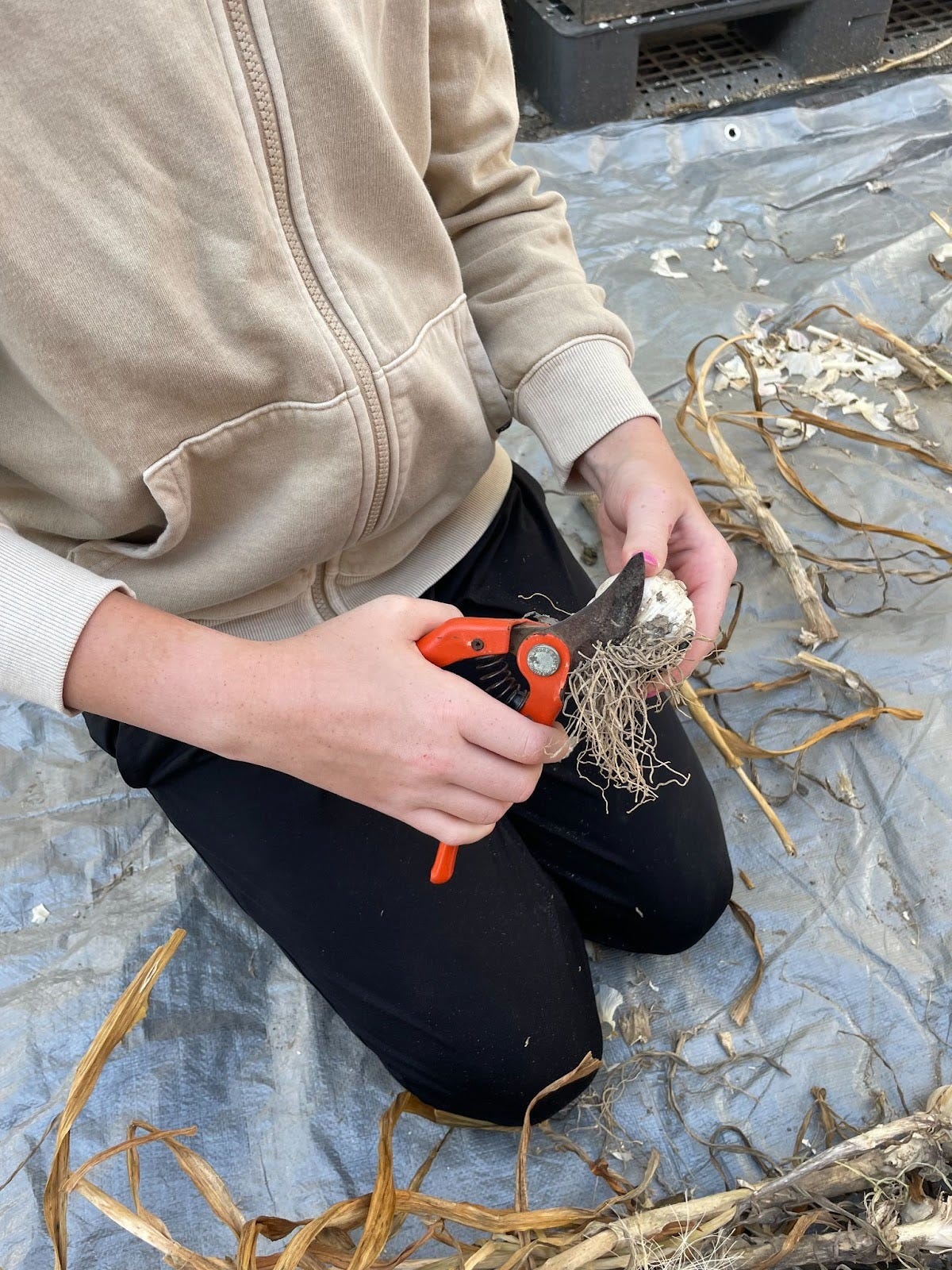
At the garlic station, students helped process this season’s cured garlic crop. While cutting the stalks and roots, they cleaned up and packaged the bulbs in five-pound mesh bags for distribution to our partner agencies. The sixth graders discussed growing methods for this hardy bulb that is planted in the fall, survives winter’s freezing temps, and is the first thing to shoot up out of the ground come spring. The brave ones even tasted the raw garlic cloves for health (or to ward off vampires).
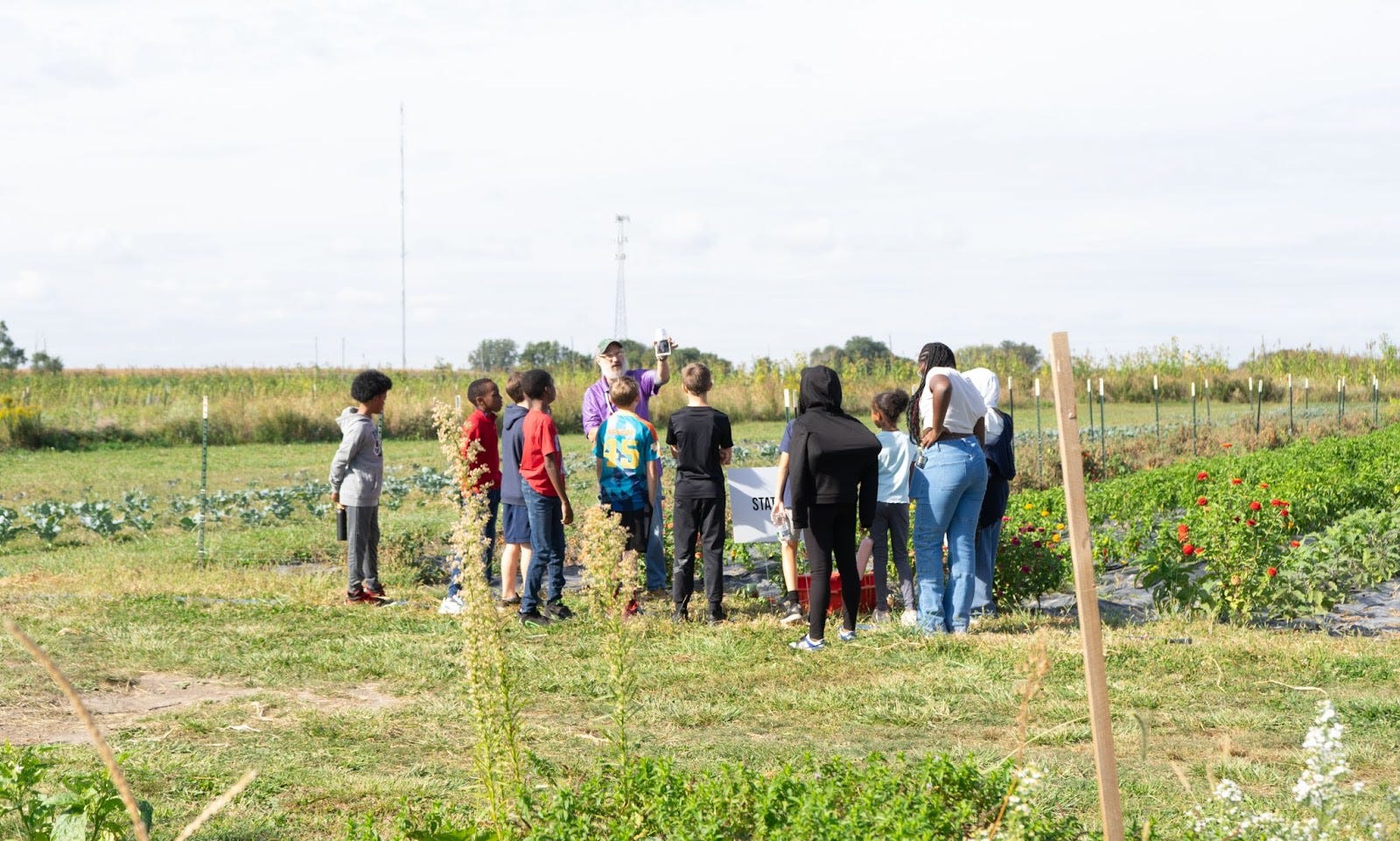
The ag & environment station featured topics where students learned about two environmental factors in farming: hydrologic conditions and soil health. Students learned about the Iowa Flood Center’s hydrologic monitoring station at the JCHPF. They were introduced to each of the hydrostation’s components, analyzed data collected at the site over time, and considered how this type of technology might assist farmers in making decisions about how to manage their farm.
Students learned about warm season crop production, like peppers and tomatoes, and how the heck you know when they are ripe to pick at the pepper station. Students learned about the efficiency of drip irrigation systems, what we mean by “local food system,” and how spending money buying local products has benefits for the local economy.
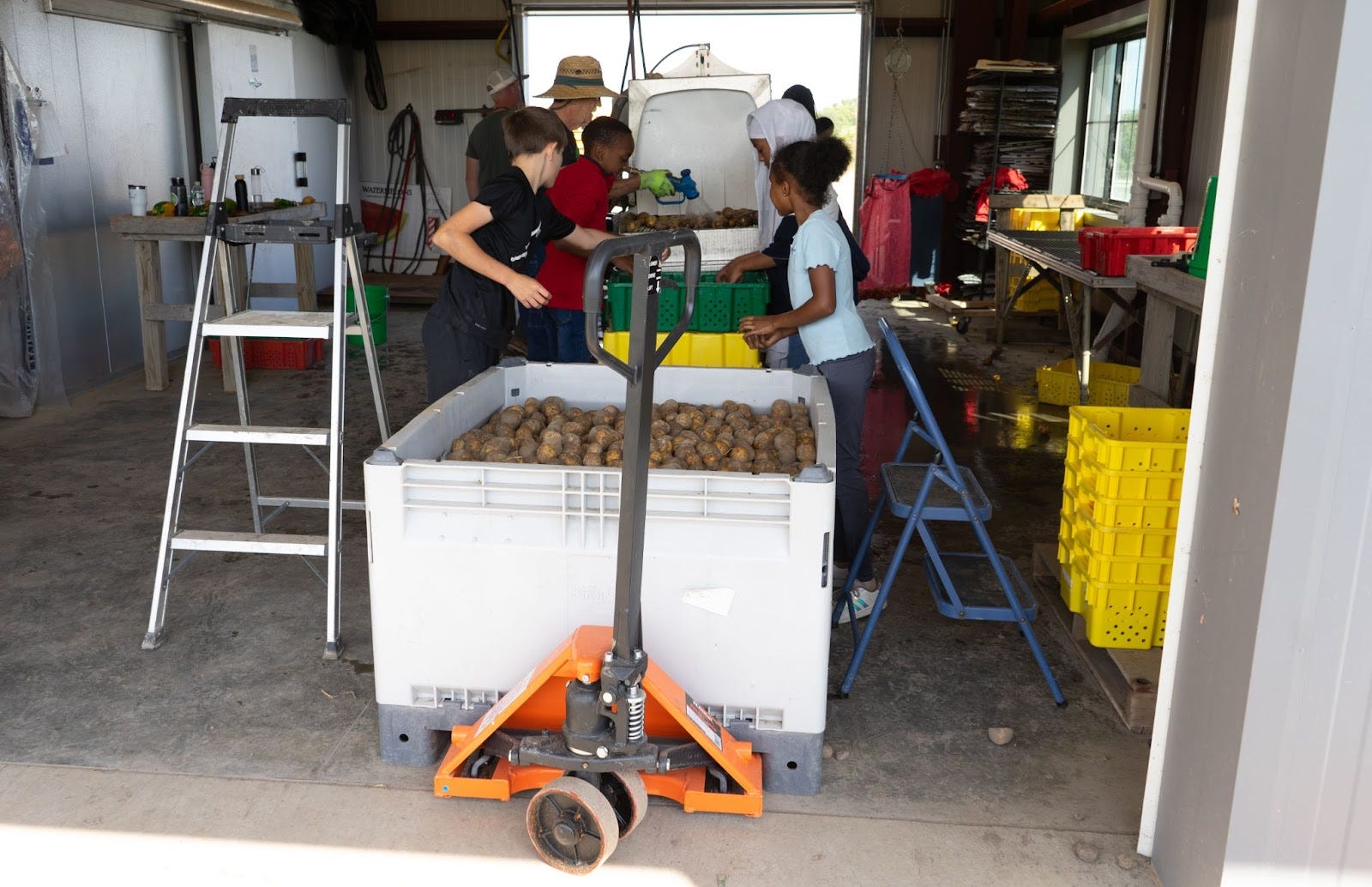
The packshed station was a crowd favorite where students helped wash and pack potatoes for distribution. We’ve never seen such enthusiasm for potatoes! The students enjoyed putting the dirty potatoes on the conveyor belt of the produce washer and watching them come out clean on the other end. They also helped us pack forty-pound potato bags that we sent out to partner agencies that week.
The Global Food Project (GFP) station offered a window into another community farming program at the JCHPF. Staff at GFP gave students a tour through the diverse community garden plots grown.
At the prairie station, students had the opportunity to sip mountain mint tea, learn some basic botany, and connect the dots around the myriad of ecosystem services provided by the prairie habitat at the farm. Students saw a switch grass plant display showing the difference between the sizes of the plants above ground and below. These deep-rooted plant communities anchor into the soil and act like a sponge, soaking up excess water and nutrients which minimizes soil runoff and pollution in waterways.
We will host another batch of future farmers – ahem, sixth graders – for winter and spring sessions in 2025. In May, every sixth grade student in the district will participate in a Can You Dig It? field trip at the farm, hopefully inspiring future stewards of the land.
Some Big Changes Ahead
Finally, we’ve got a couple of big announcements. Both Claire Zabel and Dusty Sanor, two of our farm team members, will be leaving Iowa Valley this fall. Claire, who has been with Iowa Valley since 2020, helped build Grow: Johnson County into what it is today. She’ll be moving on to greener pastures (literally) to manage her family’s farm near Rochester, Minnesota. Dusty, the farm manager for Grow for the last year, will be taking some time to spend with her partner here in Iowa City and live life to its fullest. We’re sad to see them go, but excited for their new adventures. We’re looking forward to bringing on new staff members this winter. Watch out for updates soon!